The wildlife of Antarctica and, by extension, the subantarctic islands of the Southern Ocean (Falkland Islands and South Georgia) comprises over 200 species.
Our Complete Guide to Antarctica introduces you to the entire subantarctic and Antarctic ecosystem and its remarkable wildlife.
Below is a curated selection of the main species you may encounter on an Antarctic cruise. Not all are endemic to the Antarctic region; some can be found across oceans worldwide. However, most are unique to the waters and skies of the Antarctic polar region and the seas and islands of the Southern Hemisphere.
1 – BIRDS
Around forty species of birds, totaling some 200 million individuals, thrive in the austral zone; half of them breed during the summer on the rare ice-free shores and islands surrounding the continent. The most prominent species include petrels, skuas, and, of course, penguins.
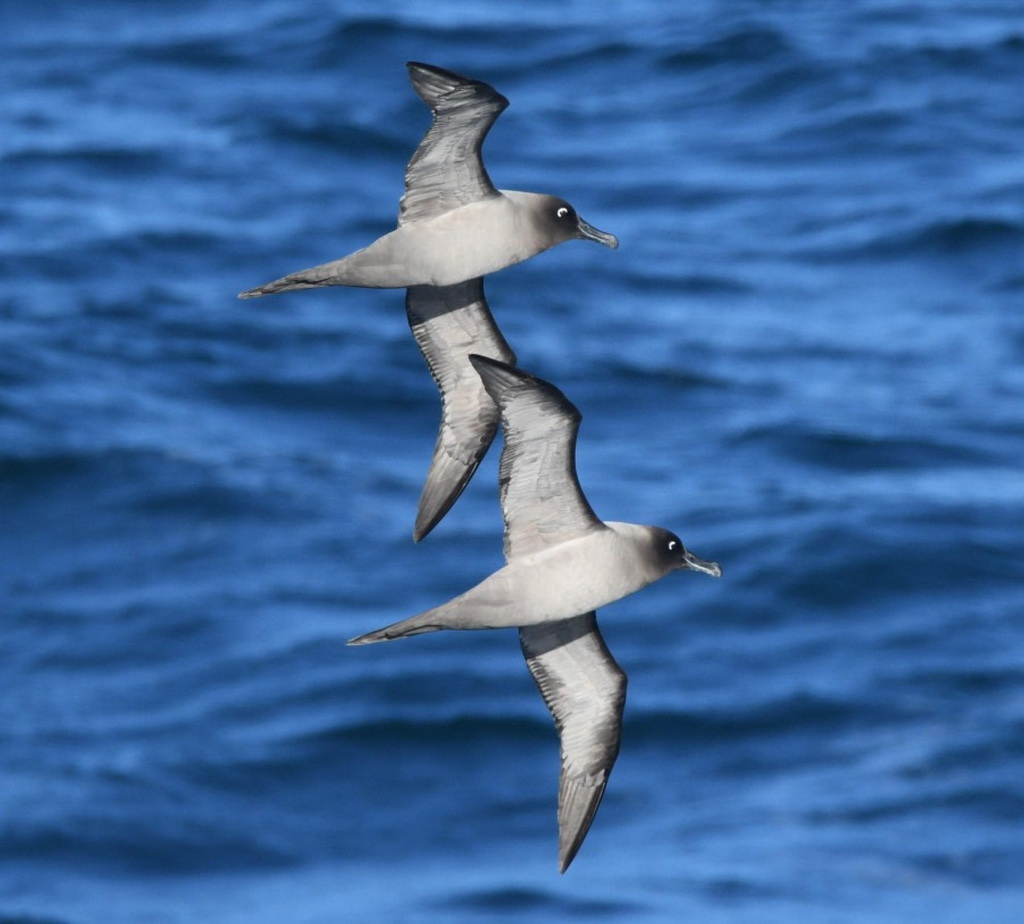
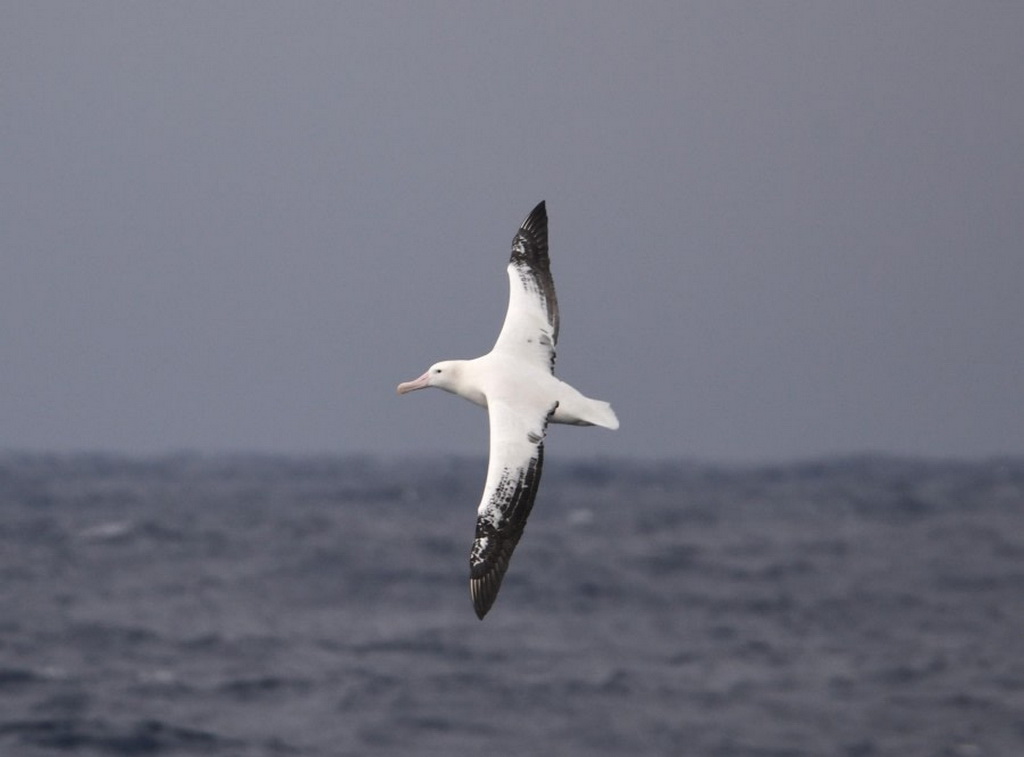
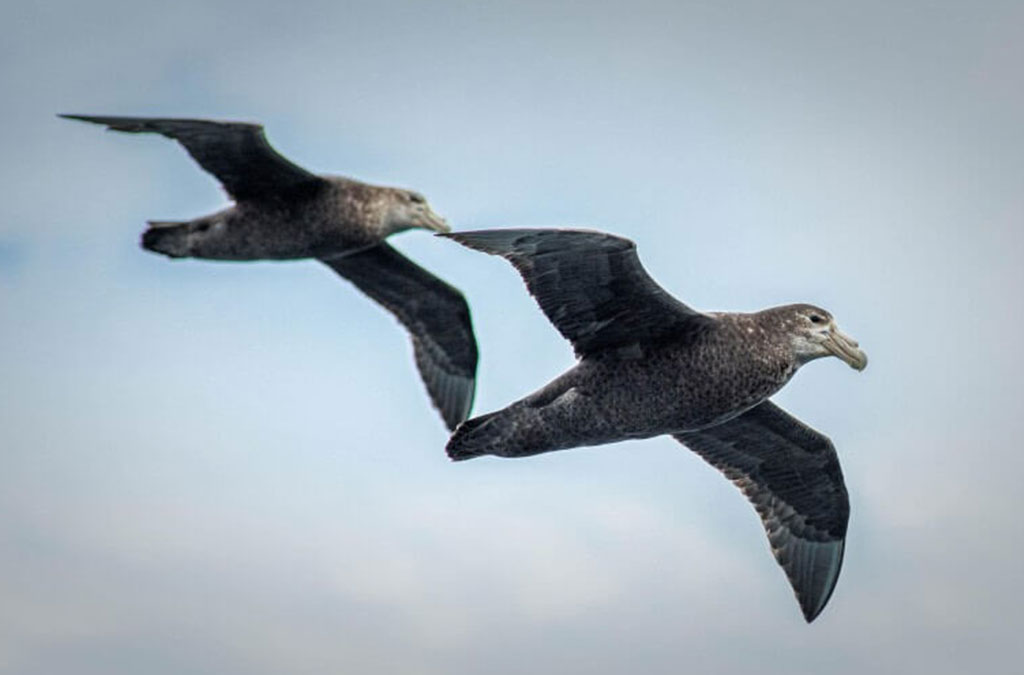
Flying Birds
- Skuas including the Brown skua (Catharacta antarctica), South polar skua (Catharacta maccormicki), and Subantarctic skua (Catharacta antarctica lonnbergi)
One of the only Antarctic species to regularly cross the Equator. Skuas are primarily scavengers, but they also prey heavily on the eggs of crested penguins and albatrosses during the summer - Cape Petrel (Daption capensis)
Its breeding grounds are found in the subantarctic islands during the summer, and it is most commonly spotted out at sea - Wilson's Storm Petrel (Oceanites oceanicus)
The smallest of all seabirds, it can migrate as far as the Arctic to feed, covering up to 40,000 km a year - Snow Petrel (Pagodroma nivea)
Pure white and the smallest of the fulmarine petrels, it is the quintessential bird of the Antarctic pack ice - Southern Giant Petrel (Macronectes giganteus)
Boasting a wingspan of up to 2.2 meters, it is often mistaken for an albatross due to its size and flight pattern. It is an opportunistic scavenger and will not hesitate to prey on penguin chicks.
It is divided into two subspecies: the Antarctic giant petrel (Macronectes giganteus proper), sporting a green bill tip and found mainly on the Antarctic continent, and the Subantarctic giant petrel (Macronectes halli) - Wandering Albatross (Diomedea exulans)
Typically observed around the subantarctic islands of South Georgia, it can reach speeds of 130 km/h, cover 1,000 km in under 24 hours, and live for up to 80 years - Black-browed Albatross (Thalassarche melanophris) The most common and widespread, with an estimated 80% of its global population nesting in the Falkland Islands.
Discover more about the 8 species of albatross
Flightless Birds
While chinstrap and gentoo penguins frequent the peninsula, only Adélies and emperors breed directly on the continental shores. Penguins congregate by the thousands on the pack ice or coastal fringes to form massive rookeries, seeking warmth and raising their young.
4 penguin species form these vast rookeries
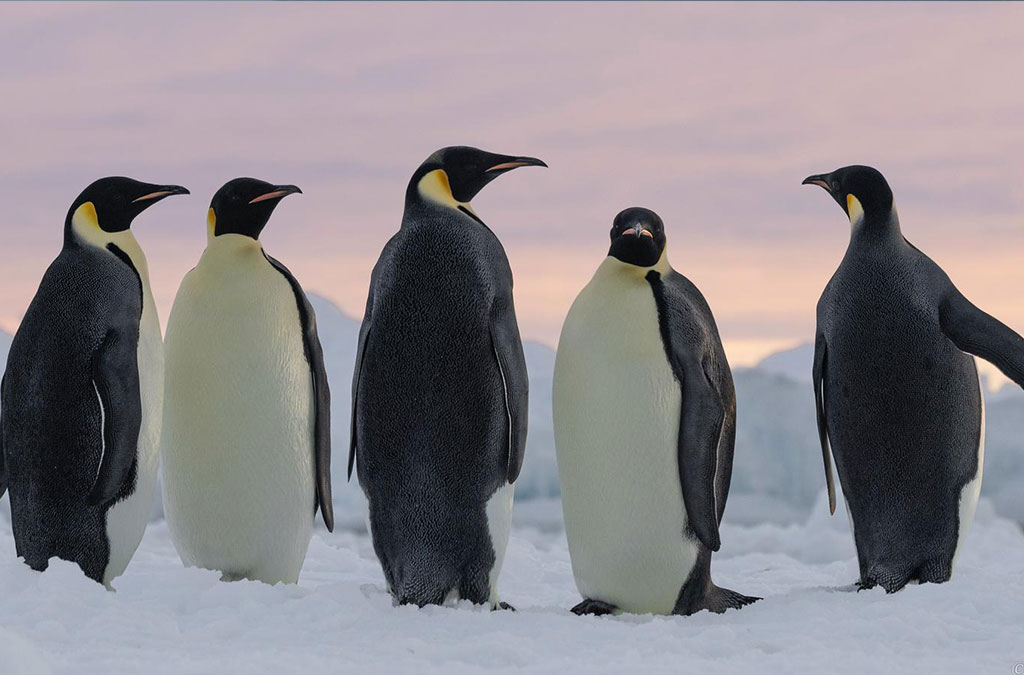
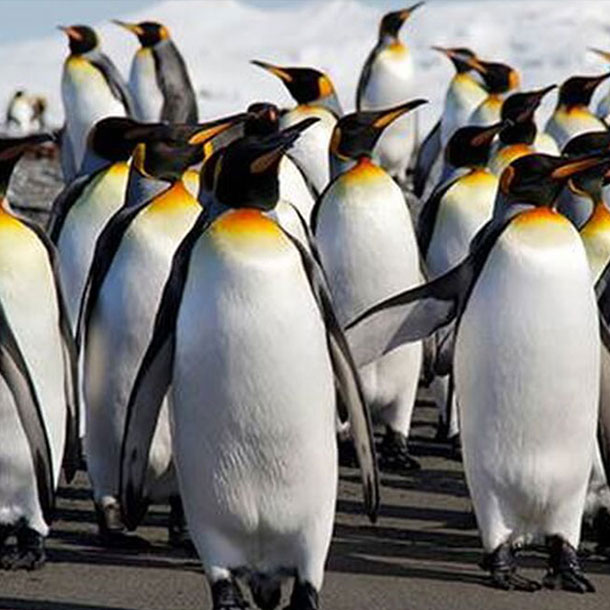
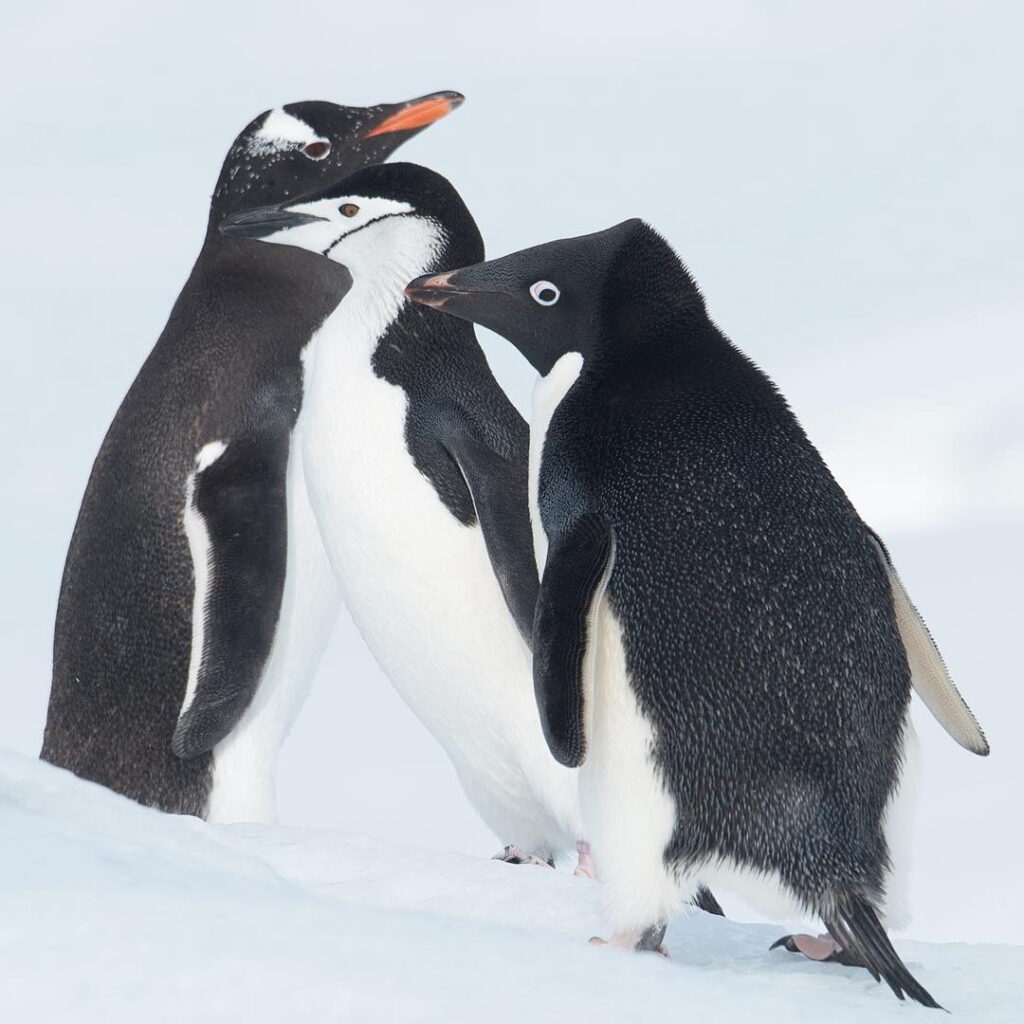
- Emperor Penguin (Aptenodytes forsteri)
The tallest and heaviest of all penguins, standing up to 1 to 1.3 meters tall and weighing between 25 and 41 kg. The emperor penguin’s breeding cycle runs opposite to all other species, relying on extraordinary group cooperation to withstand the brutal polar winter. - Chinstrap Penguin (Pygoscelis antarcticus)
The second most abundant penguin species in the world, with a population estimated at 15 million individuals. Chinstraps are frequently found nesting near gentoo and Adélie colonies - Adélie Penguin (Pygoscelis adeliae)
Along with the emperor penguin, this is the only species whose range is strictly confined to the Antarctic continent and its sea ice. - Gentoo Penguin (Pygoscelis papua)
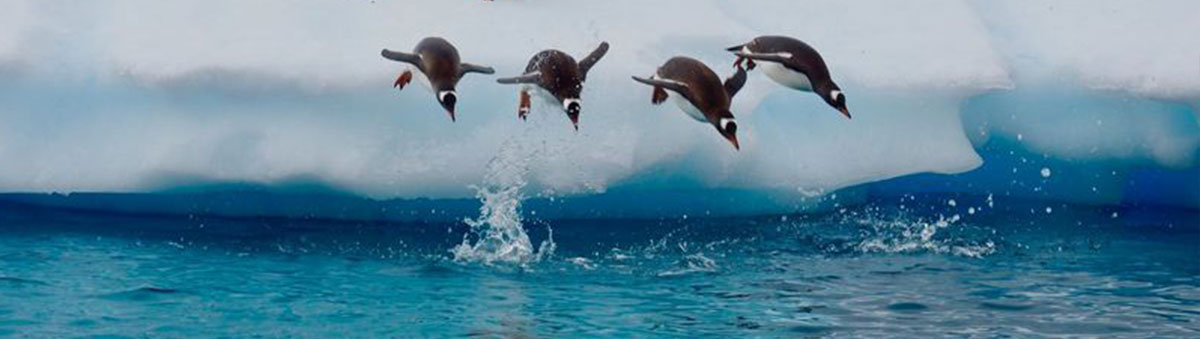
The gentoo penguin is the fastest underwater swimmer of all penguins, clocking speeds up to 35 km/h!
This species is divided into two subspecies: Pygoscelis papua papua and Pygoscelis papua ellsworthii, the latter being smaller and inhabiting more southerly reaches of the Antarctic Peninsula. - King Penguin (Aptenodytes patagonicus)
The close cousin of the emperor penguin, slightly smaller in stature. With a population estimated between 2 and 3 million individuals, numbers are steadily increasing each year. A few individuals have even been sighted recently in Tierra del Fuego. They breed across the beaches of subantarctic islands.
Discover more about the 8 species of Antarctic penguins
2 – MARINE MAMMALS
Pinnipeds
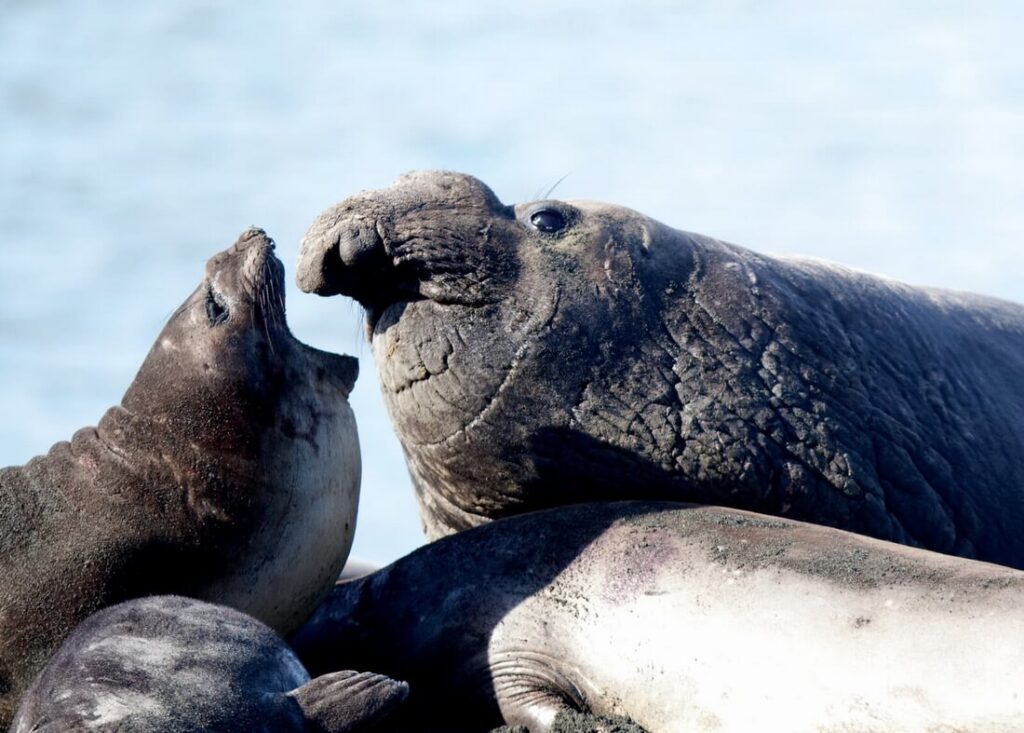
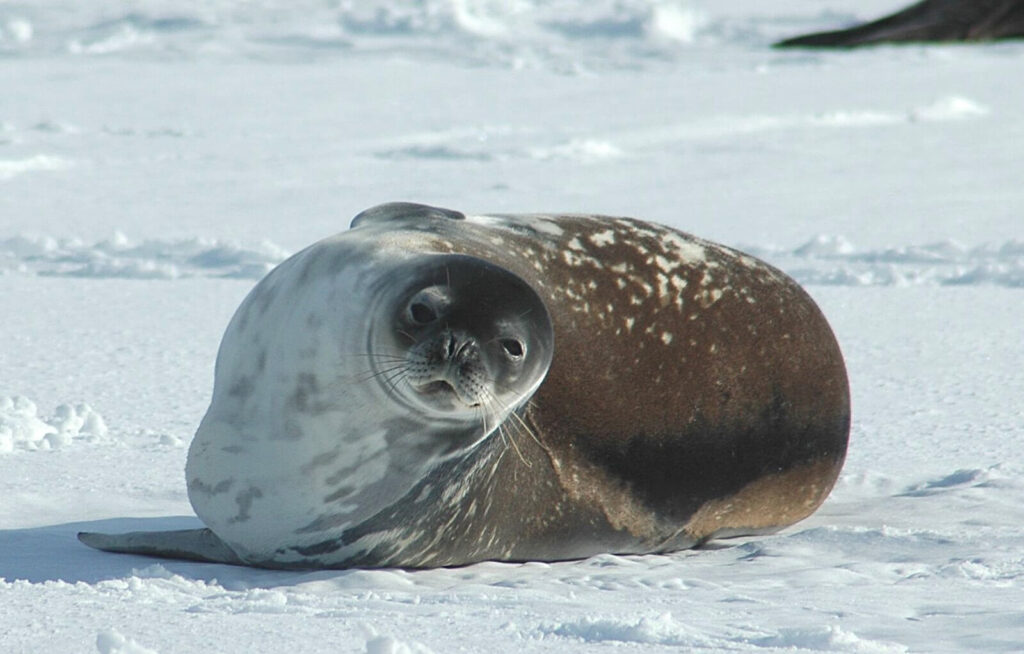
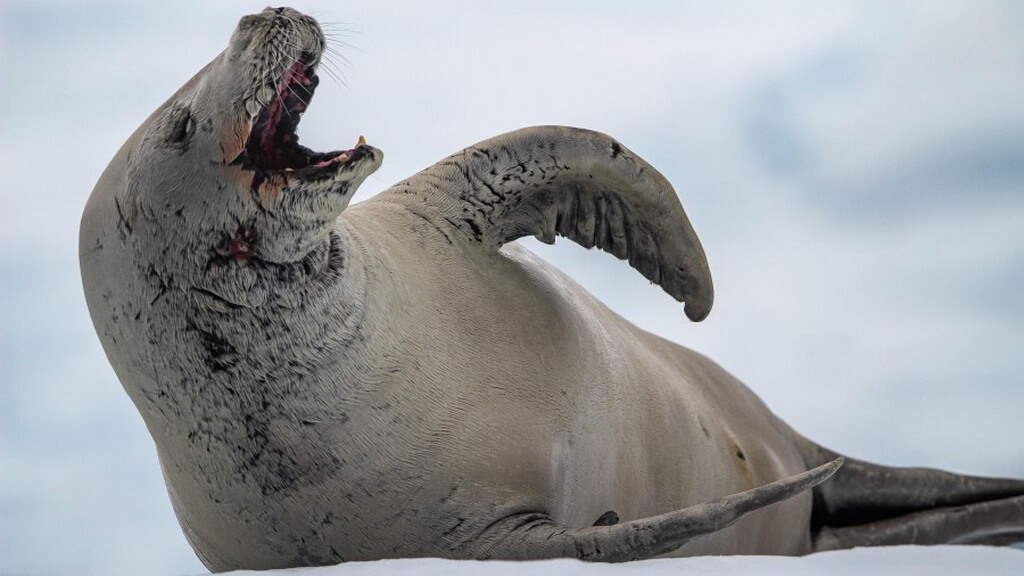
- Southern Elephant Seal (Mirounga leonina)
A giant of the Southern Ocean, living up to its name with a massive body weighing up to 4 tons. Adult males develop an inflatable trunk-like proboscis. A thriving population ranges from the shores of Patagonia all the way to Antarctica, with a massive breeding stronghold in South Georgia - Ross Seal (Ommatophoca rossii)
The smallest of the Antarctic seals, instantly recognizable by its enormous eyes measuring 7 cm across - Weddell Seal (Leptonychotes weddellii)
The second largest true seal, tipping the scales at 400 kg. An exceptional diver, it can plunge to depths of 500 meters and stay submerged for an hour - Crabeater Seal (Lobodon carcinophaga)
The most abundant seal on the planet, with a population estimated at 15 million individuals—nearly one out of every two seals alive is a crabeater. Despite its name, its diet consists almost entirely (90%) of Antarctic krill - Leopard Seal (Hydrurga leptonyx) The only pinniped that primarily feeds on warm-blooded prey, capable of consuming up to 20 penguins a day.
- Antarctic Fur Seal (Arctocephalus gazella)
Also known as the Kerguelen fur seal, gazella derives from the German vessel SMS Gazelle, which documented the species near the Kerguelen Islands. It is easily distinguished by its shorter, more pointed muzzle compared to true seals.
Cetaceans
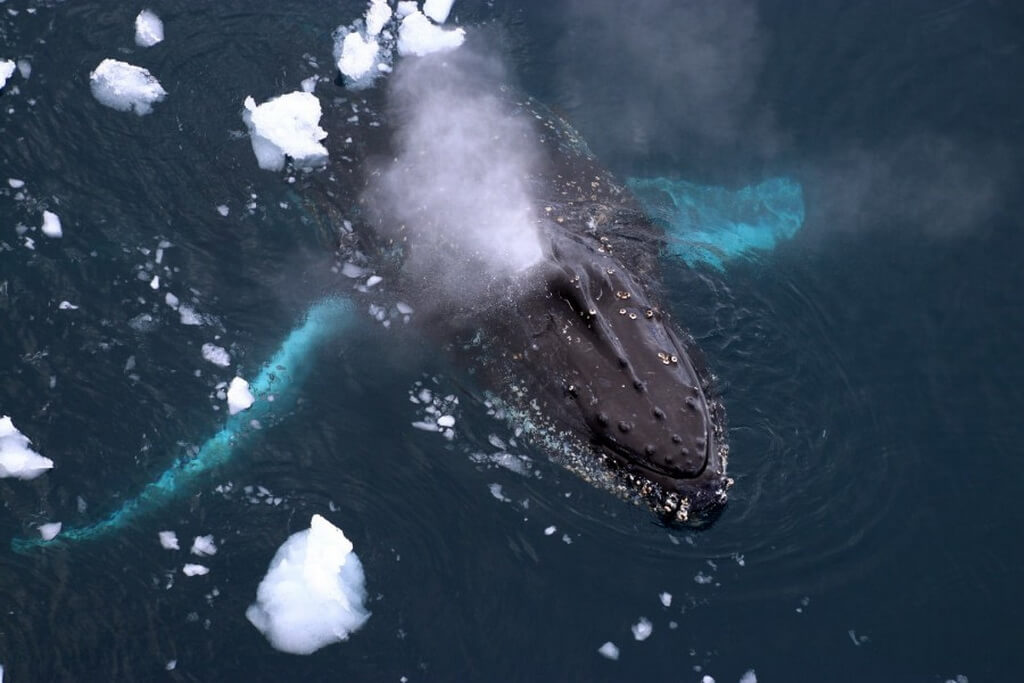
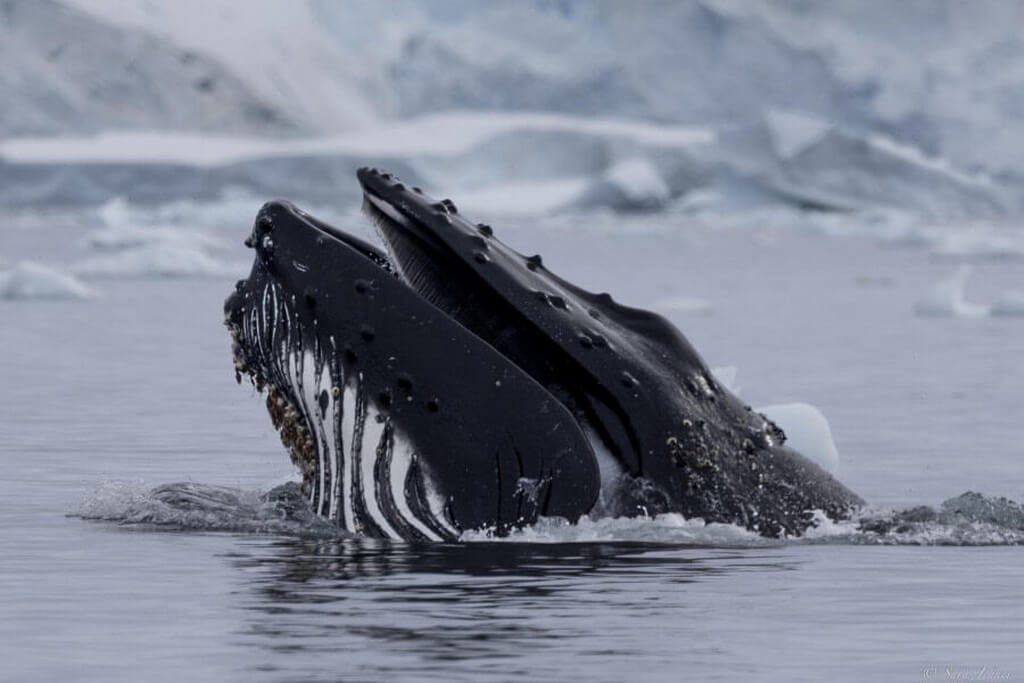
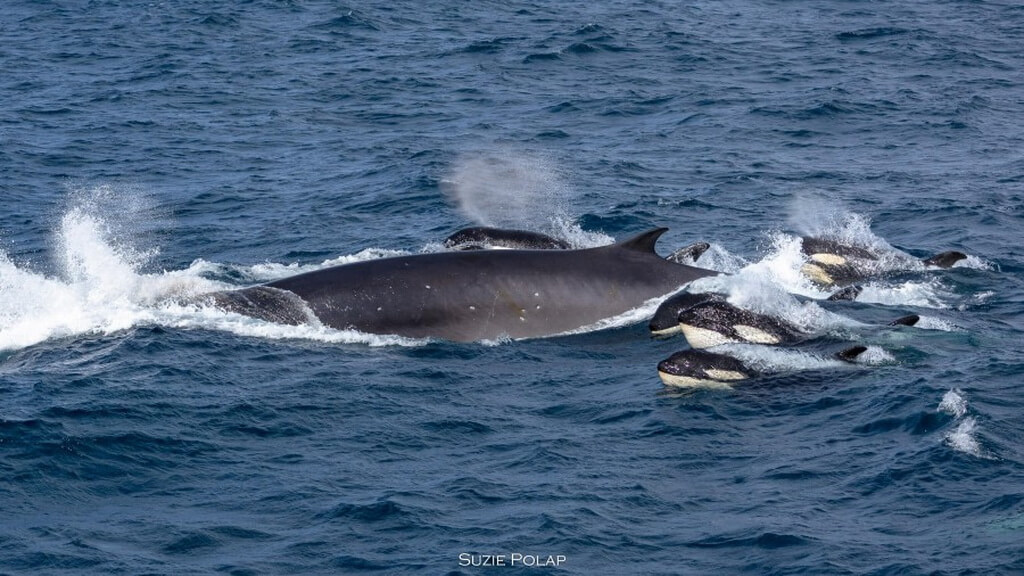
Whales
- Southern Right Whale (Eubalaena australis)
Found throughout the Southern Hemisphere, females can reach up to 16 meters. Renowned in Argentina as one of its primary breeding grounds lies within the sheltered bays of the Valdés Peninsula. It is easily identified by its deep black coloration and the massive callosities framing its head. - Blue Whale (Balaenoptera musculus)
Abundant in polar waters during the feeding season, the blue whale is instantly recognizable by its powerful blow projecting water over 9 meters high, and its mottled blue-gray skin. It is also the largest animal on Earth, reaching lengths of up to 27 meters and weighing as much as 125 tons. - Humpback Whale (Megaptera novaeangliae)
Adults can reach 14 meters in length. Humpback whales inhabit all the world's oceans except the high Arctic, with over half the global population roaming the Southern Hemisphere. They are easily spotted by their black backs and the striking white underside of their tail flukes. - Antarctic Minke Whale (Balaenoptera bonaerensis)
The smallest of the rorquals, reaching up to 10 meters in length. It is distinguished by its dark gray back and white belly, and can be encountered across the entire Southern Hemisphere.
Learn more: The 7 Whale Species of Antarctica
Dolphins
- Commerson's Dolphin (Cephalorhynchus commersonii)
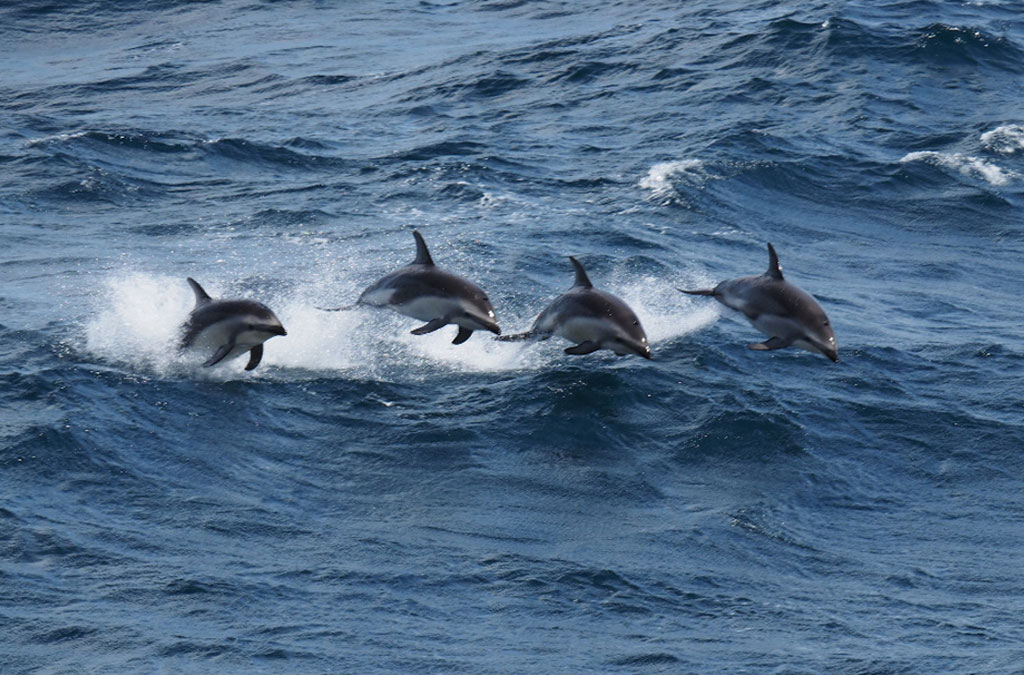
Discovered by Commerson during Bougainville's expedition, this small dolphin navigates subantarctic waters along the coasts from the Strait of Magellan to the Falkland Islands and Cape Horn. - Hourglass Dolphin (Lagenorhynchus cruciger)
Affectionately called the sea cow by mariners, this striking small dolphin thrives near the pack ice. Its name derives from the distinct hourglass pattern visible from above. It is a protected and vulnerable species. - Long-finned Pilot Whale (Globicephala melas)
Found across the subantarctic region down to 68°S, it is easily recognized by its jet-black color and the prominent, bulbous melon shaping its head. - Orca or Killer Whale (Orcinus orca orca).
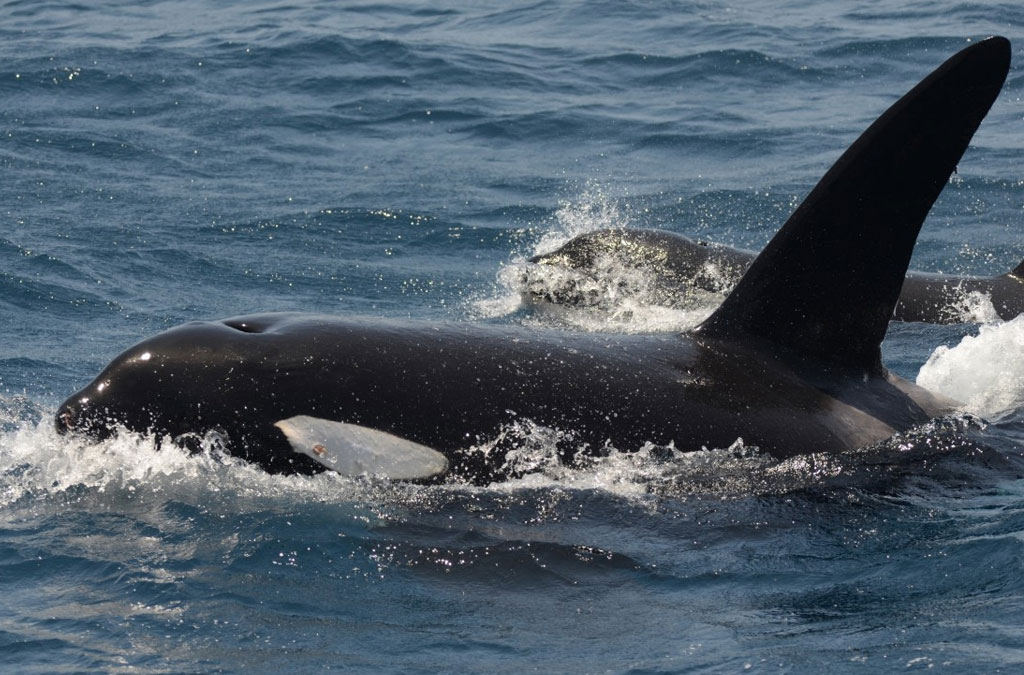
The largest member of the dolphin family. Also widely known as the killer whale). Easily recognized by its tall dorsal fin and striking black-and-white coloration. Males measure between 7 and 9.80 m, weighing 5.5 to 7 tons, while females range from 4.5 to 8.50 m and weigh 2.5 to 4.7 tons.
Three distinct ecotypes of orcas roam Antarctic waters. Around the Antarctic Peninsula:- Type A preys primarily on minke whales and favors the open ocean.
- Type B1 (pack ice orcas or Orcinus orca glacialis) concentrates around coastal sea ice floes to hunt seals.
- Type B2 (Gerlache orcas or Orcinus orca nanus), smaller than Type A, is renowned for hunting penguins.
To learn more, explore our Antarctica Guide