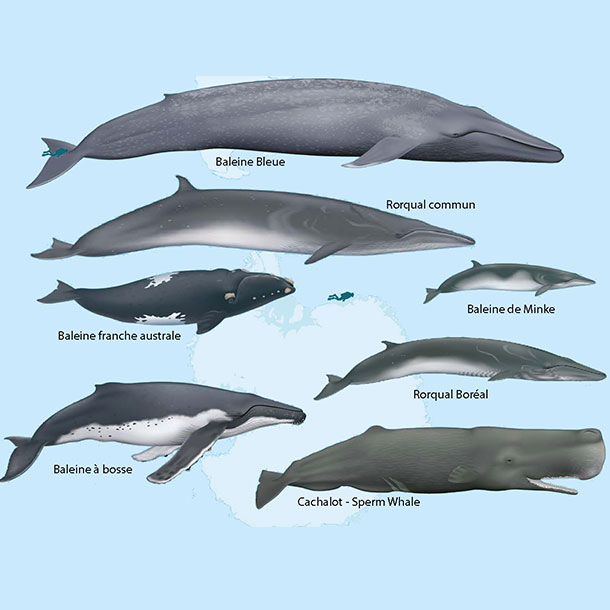
The orca, or "killer whale" (Orcinus orca), is one of the most iconic and captivating marine mammals in our oceans. Roaming every ocean across the globe, this apex predator captivates polar travelers with its intelligence, unique social structure, and sheer power. Eager to learn more about these black-and-white ocean giants? Discover 10 remarkable facts about orcas, their habitat, lifestyle, and diet—and find out where to spot them on an expedition cruise!
The Orca
- Scientific name: Orcinus orca
- Animal group: Marine mammal (cetacean)
- Family: Dolphin
- Other names: Killer whale (Killer whale in English and ballena asesina in Spanish)
- Size: Adult males measure around 8.2 meters (27 feet) and weigh up to 6,000 kg (13,200 lbs), while females reach around 7 meters (23 feet) and 3,600 kg (7,900 lbs)
- Appearance: Black with white undersides, white patches behind the eyes, large paddle-shaped pectoral fins
- Dorsal fins: Up to 2 meters (6.5 feet) high and triangular (male); smaller and curved (female)
- Distribution: Worldwide
- Conservation status: Protected species
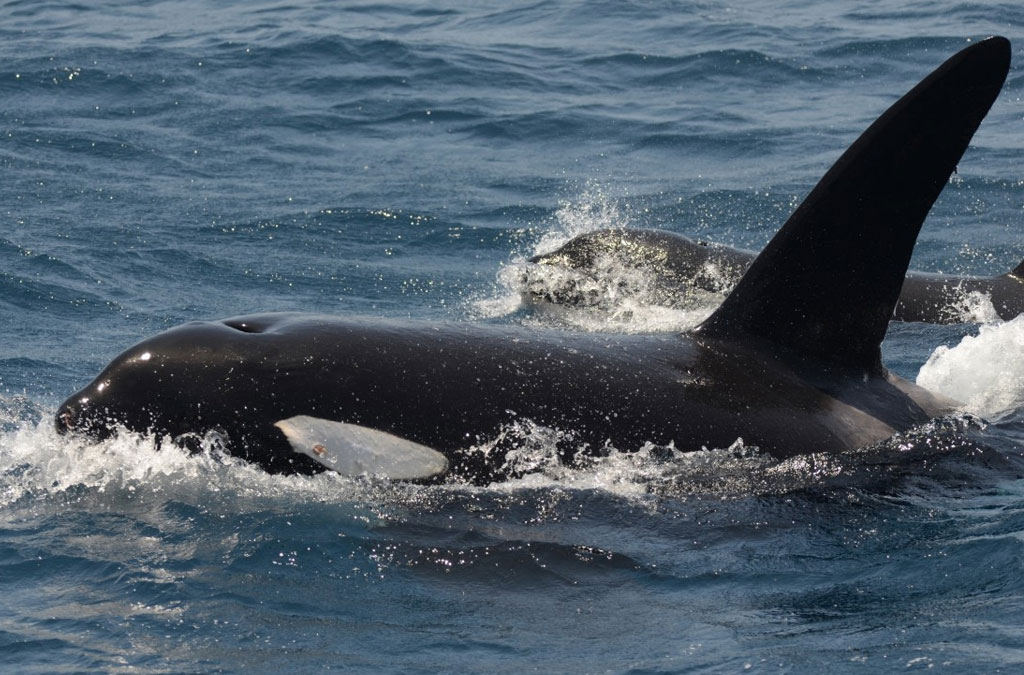
1. The Orca: A Highly Social and Intelligent Animal
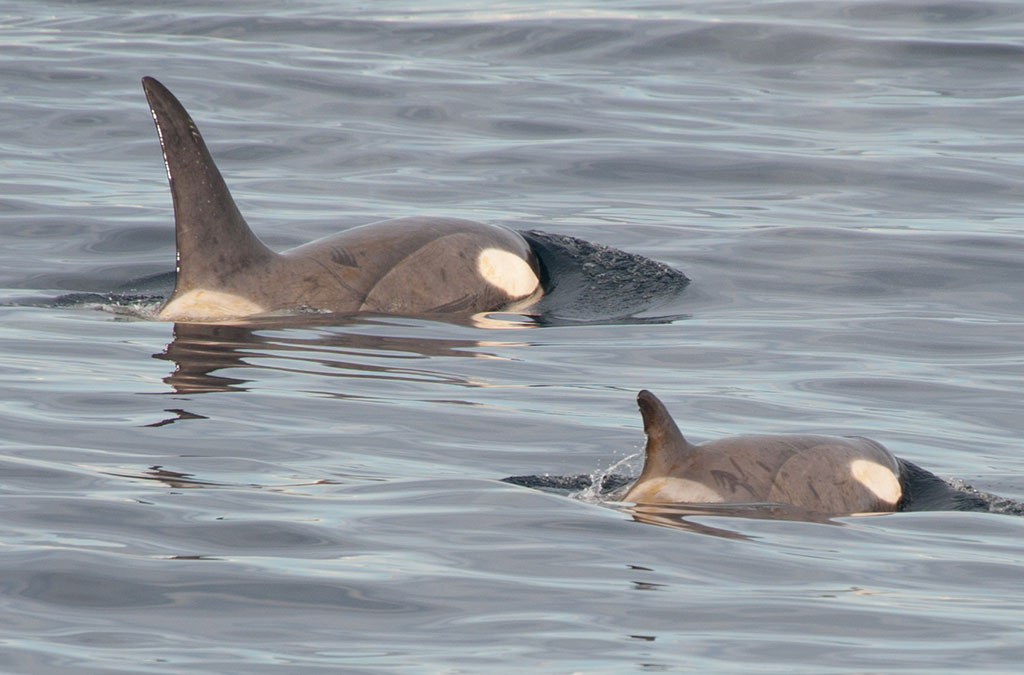
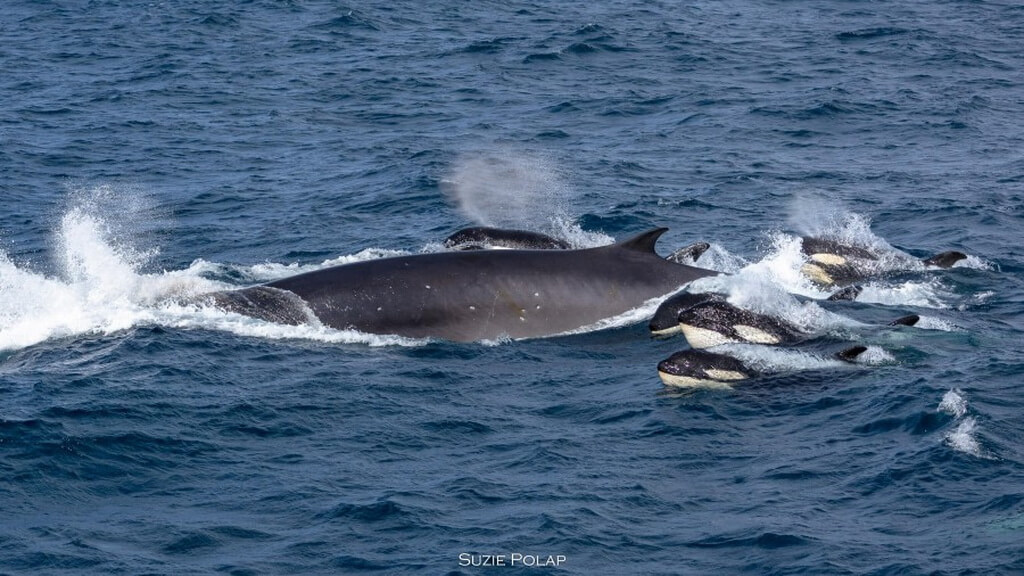
Orcas live in close-knit family units called "pods," led by a matriarch. Each pod develops its own traditions, dialects, and social behaviors. Offspring remain with their mother's pod for life, and raising young calves is a true collective effort.
2. Diverse Orca Ecotypes Around the Globe
Scientists identify 10 distinct ecotypes of orcas, differentiated by their diet (fish, marine mammals, seals, sharks, etc.), pod size, and physical features. Orcas in Antarctica, the North Atlantic, or the Pacific exhibit unique behaviors masterfully adapted to their extreme environments.
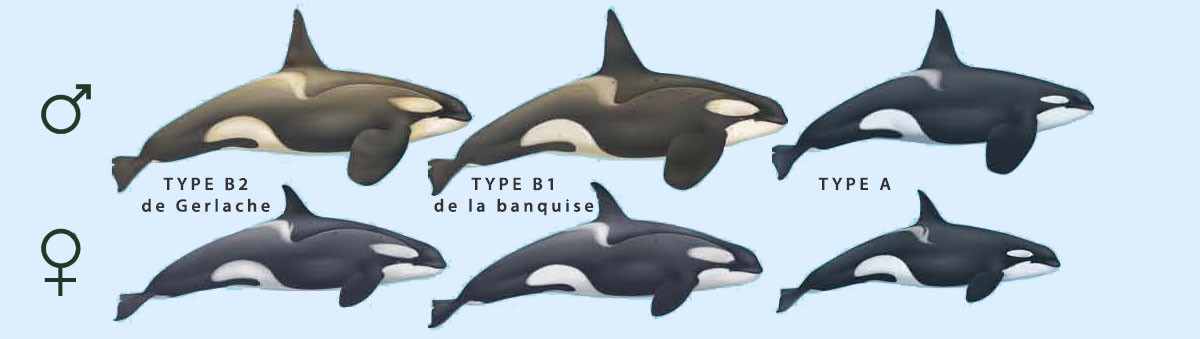
Three distinct ecotypes (A, B, C) are found across Antarctica. Types A, B1, and B2 are regularly encountered along the Antarctic Peninsula.
- Type A preys primarily on minke whales and favors the open ocean.
- Type B1 (pack ice orcas or Orcinus orca glacialis) concentrates around coastal sea ice floes to hunt seals.
- Type B2 (Gerlache orcas or Orcinus orca nanus), smaller than Type A, is renowned for hunting penguins.
3. Why Are They Called "Killer Whales"?
This moniker dates back to 18th-century Spanish sailors who, witnessing them hunt baleen whales, called them "asesina ballenas" (whale killers), which was mistranslated into English as killer whale. Despite this fierce reputation, wild orcas show no natural aggression toward humans. The scientific name Orcinus orca stems from Orcus, the Roman god of the underworld, and Orca, referring to a large marine creature.
4. The Orca: The World's Largest Dolphin
Despite being called "whales," orcas actually belong to the oceanic dolphin family (Delphinidae). They stand out by their formidable size—reaching up to 8.2 meters (27 feet) for males—and their undisputed reign as apex predators at the very top of the marine food chain.
5. Precision Hunting Powered by Echolocation
Orcas rely on advanced echolocation to navigate polar waters and track prey, even in murky depths. The high-frequency clicks emitted by the animal can pinpoint the shape, size, and distance of prey up to 150 meters (500 feet) away.
6. A Complex and Sophisticated Language
Orcas communicate through specialized clicks, whistles, and pulsed calls. Each pod possesses a unique vocal dialect, passed down from generation to generation. Certain calls can echo through the water across several kilometers.
7. Unihemispheric Sleep: Always on Watch
Orcas utilize unihemispheric sleep: one half of their brain rests while the other stays alert, allowing them to consciously surface to breathe. The corresponding eye stays open, keeping a watchful look over their icy surroundings.
8. Roaming Every Ocean on Earth
Orcas range from the Arctic to the Southern Ocean, navigating freezing polar pack ice as well as temperate and tropical waters. Their presence shifts with food availability, with some pods undertaking long migrations following fish runs or marine mammal movements.
9. The Orcas of Antarctica
The Antarctic orca population is estimated at between 25,000 and 27,000 individuals, representing the greatest concentration of orcas on Earth. The total worldwide population is estimated between 50,000 and 100,000 individuals. Several ecotypes (subspecies) patrol Antarctic waters.
Ecotypes and Characteristics
Type A (Antarctic Killer Whale): Characterized by their larger size and open-water habits, they primarily hunt Antarctic minke whales.
Type B1 (Pack Ice Killer Whale): A specialized population of fewer than 100 individuals that hunts seals on sea ice floes in small packs.
Type B2 (Gerlache Killer Whale):
Frequently sighted in the Gerlache Strait, with 189 individuals documented between 2015 and 2019, feeding mainly on penguins.
Type C (Ross Sea Killer Whale): Found in larger pods with an estimated population of 25,000 individuals, specializing in Antarctic toothfish.
10. The Remarkable Longevity of Female Orcas
In the wild, female orcas can live for an astounding up to 90 years! Males typically live between 30 and 60 years. Sadly, in captivity, their life expectancy plummets to 20–30 years due to chronic stress and unnatural conditions.
Frequently Asked Questions:
Why are orcas called "killer whales"?
How many orcas are there in the world?
How many orcas live in Antarctica?
Are orcas friendly toward humans?
How long do orcas live?
You may also be interested in:
- Antarctic Wildlife
- The 7 whale species found in Antarctica
- The 8 albatross species of the Southern Ocean
- The 8 penguin species found in Antarctica and the subantarctic islands